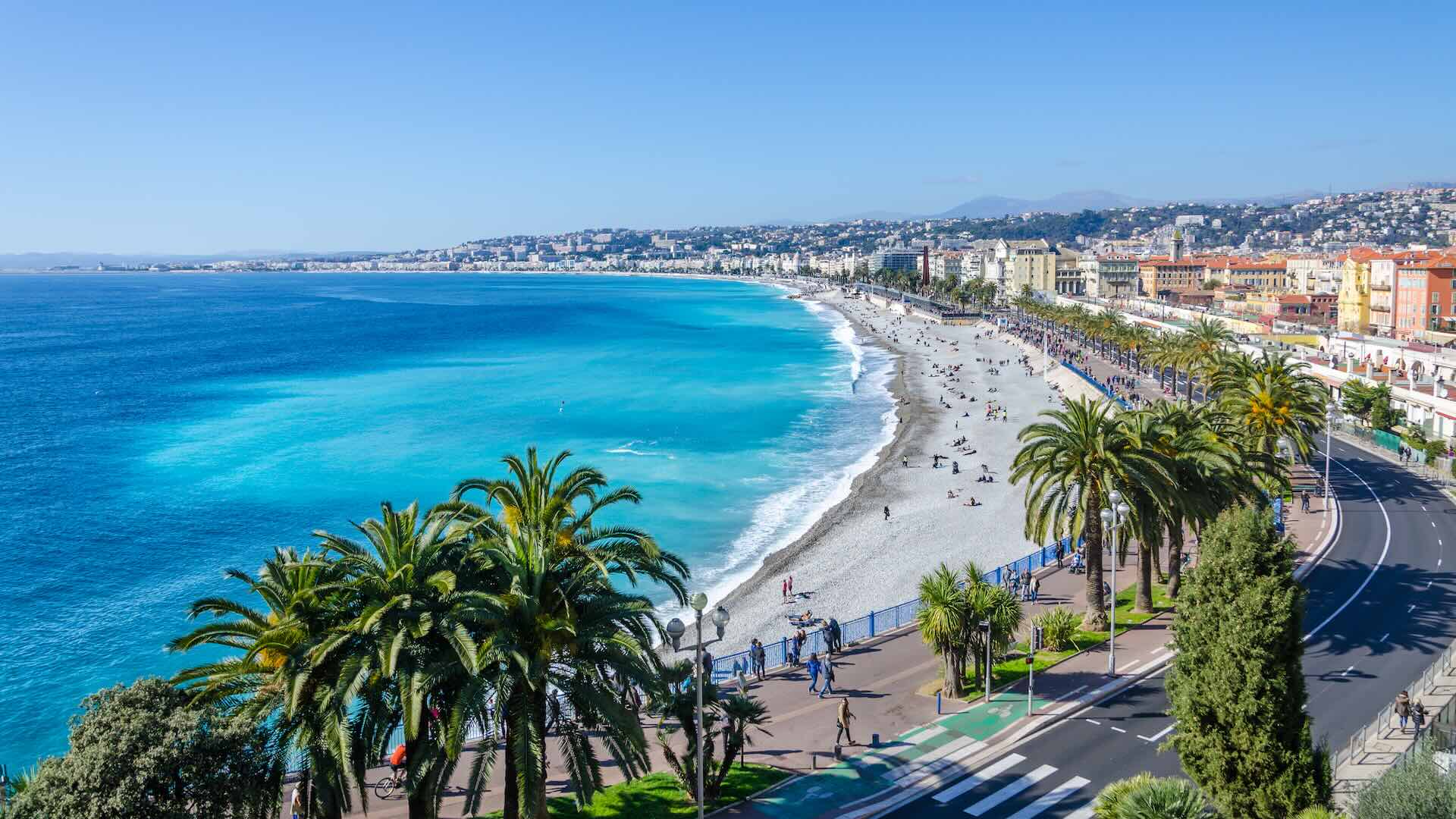
OACIS events at the Third United Nations Ocean Conference, June 2025, Nice, France
The third United Nations Ocean Conference (UNOC3) was a historic gathering that drew over 15,000 attendees and 60 Heads of State to Nice, France from 9-13 June 2025. The conference, jointly hosted by France and Costa Rica, focused on accelerating action and mobilizing all actors to conserve and sustainably use the ocean, and sought support for the implementation of Sustainable Development Goal (SDG) 14. OACIS co-organized two events at the conference.
The first event, “Ocean-based solutions: from blue carbon to ocean alkalinity enhancement,” was hosted by the Institut de la Mer de Villefranche. Throughout the event, experts in science, economics, conservation, policy, and business debated the effectiveness, co-benefits, and potential limitations of proposed ocean-based solutions to climate change. Government representatives Tom Pye, Head of Ocean Climate and Science at UK DEFRA, and Marc Moroni, French focal point for IPCC, provided introductory messages highlighting the actions of their countries in this domain, while panelists discussed two marine carbon dioxide removal (mCDR) approaches: the protection and restoration of blue carbon, a nature-based approach, and ocean alkalinity enhancement, a technological approach.
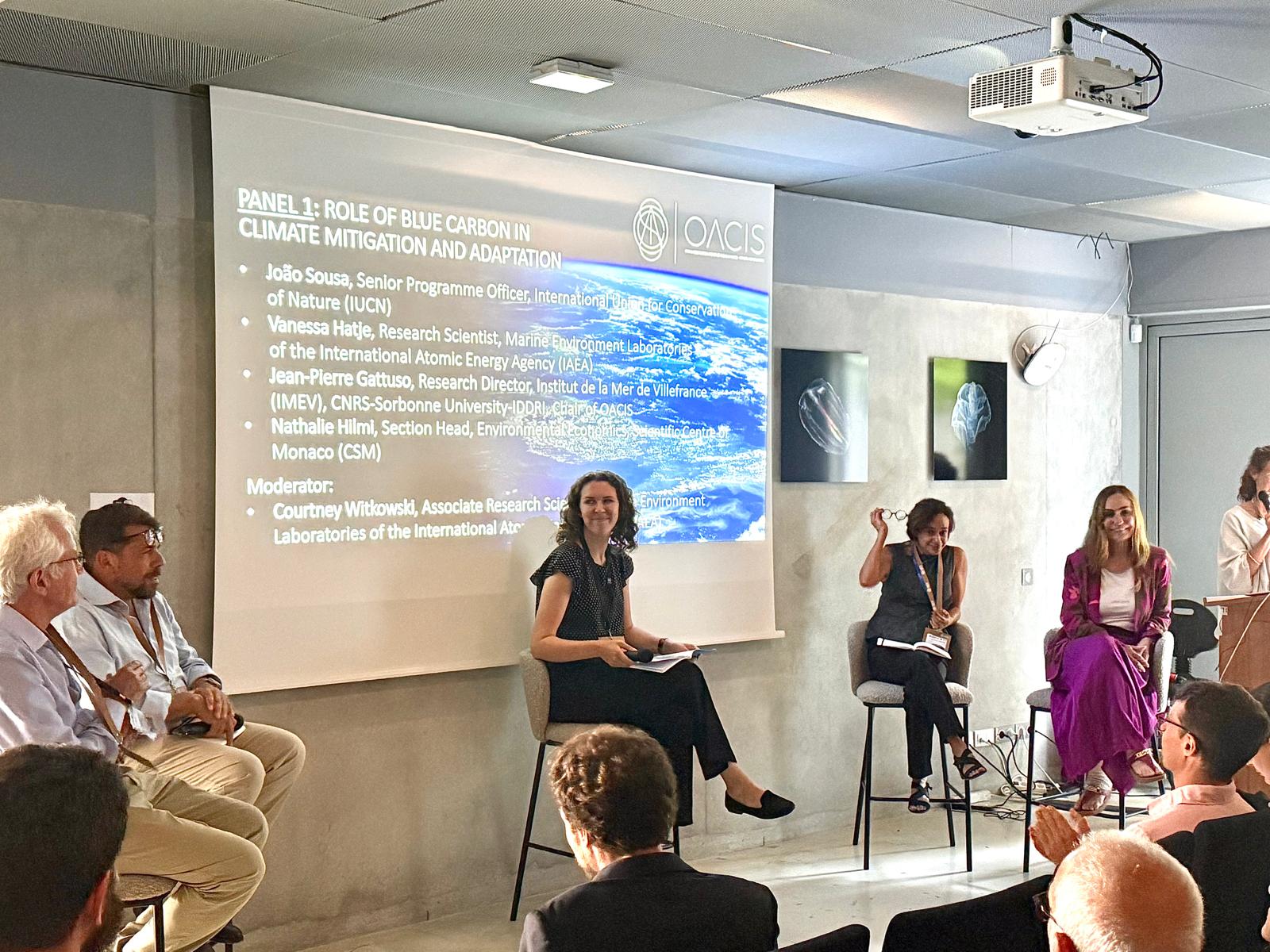
The first panel discussing the role of blue carbon in climate mitigation included Jean-Pierre Gattuso (CNRS-Sorbonne Université-Iddri), Joao Sousa (IUCN), Vanessa Hatje (IAEA), and Nathalie Hilmi (Centre Scientifique de Monaco), and was moderated by Courtney Witkowski (IAEA OA-ICC).
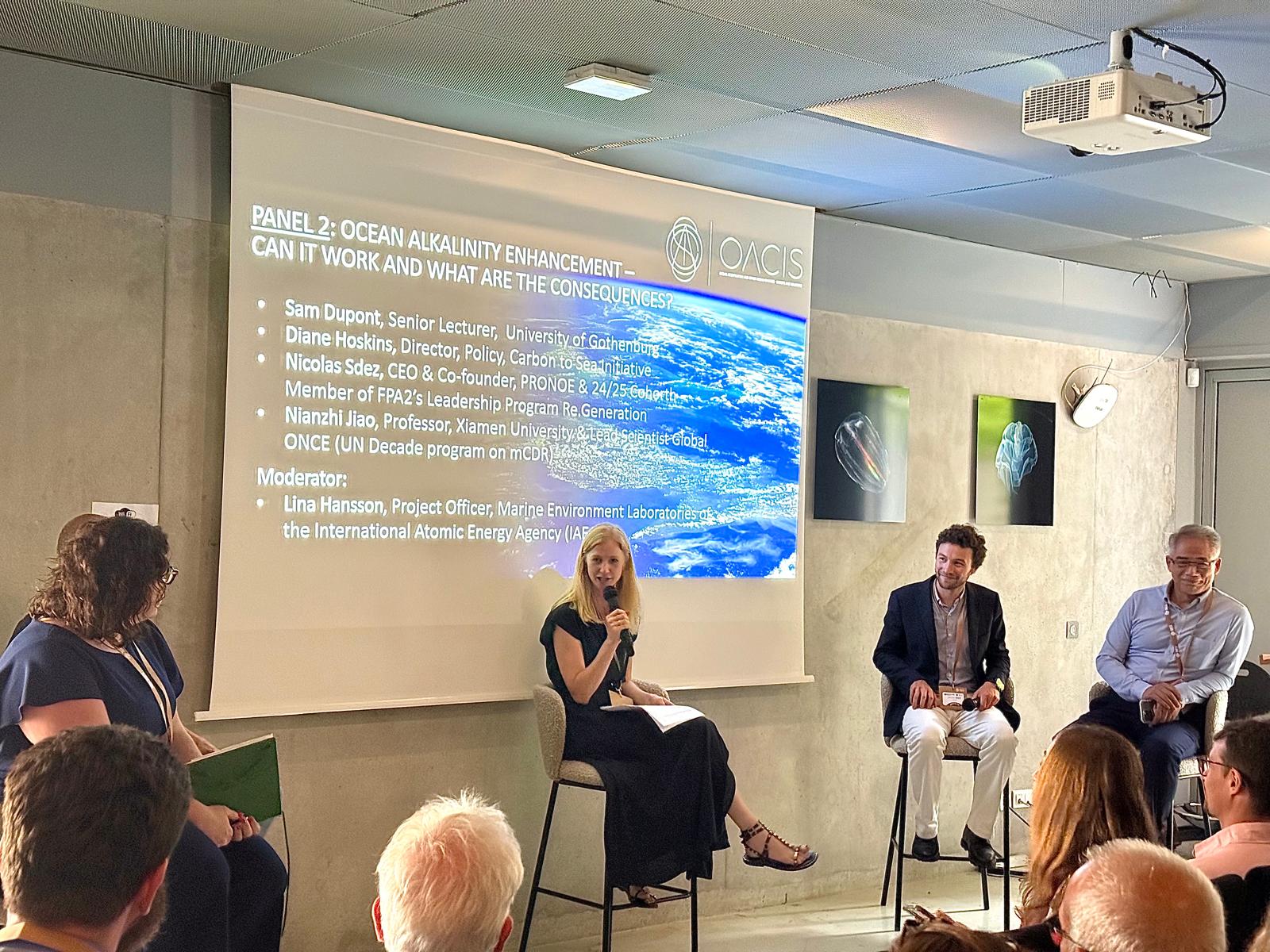
The second panel discussing ocean alkalinity enhancement included Sam Dupont (University of Gothenburg), Diane Hoskins (Carbon to Sea), Nicolas Sdez (PRONOE), and Nianzhi Jiao (Xiamen University), and was moderated by Lina Hansson (IAEA OA-ICC).
The OA-ICC gathered with partners of OACIS again later in the week to host “Beyond tipping points: safeguarding biodiversity in a changing ocean.” This event started with an interactive quiz that assessed the participants viewpoints on tipping points, which refer to thresholds beyond which a small change can lead to a significant and often irreversible shift. Following the quiz, a panel of experts discussed the challenges of assessing impacts to biodiversity in a changing ocean and misconceptions around tipping points. The discussion highlighted the complexity of ocean management amidst multiple ocean stressors and the importance of investing in Indigenous Peoples and Local Communities (IPLCs) to safeguard biodiversity. Building capacity on ocean acidification and related stressors is key to ensuring an inclusive research community, fully equipped to address these complexities. The panel concluded with the consensus that while there is value in tipping points as tools, we have clear scientific evidence that the ocean is under threat, and we have enough knowledge to act now.
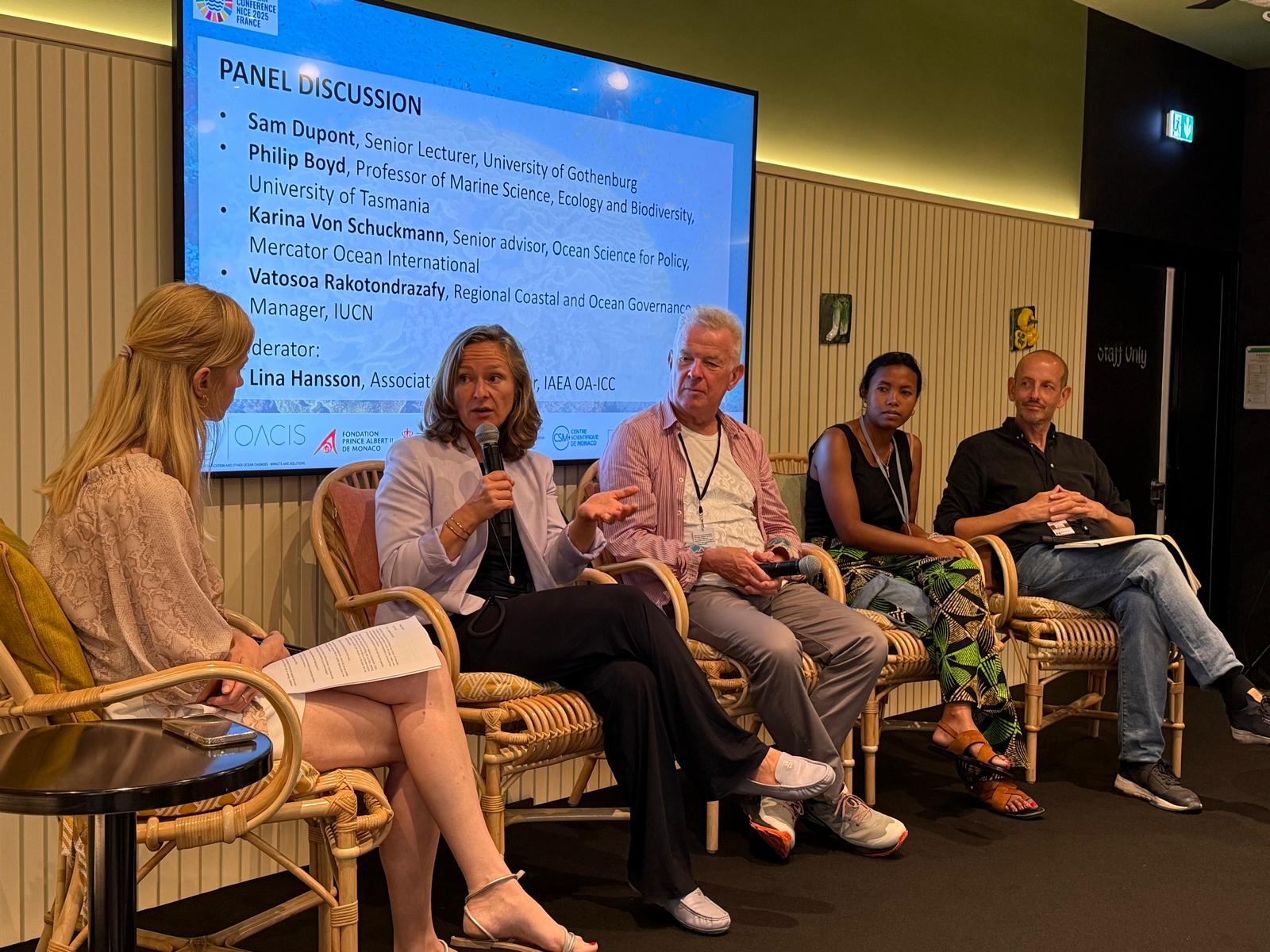
Panelists Karina Von Schuckmann (Mercator Ocean International), Philip Boyd (University of Tasmania), Vatosoa Rakotondrazafy (IUCN), and Sam Dupont (University of Gothenburg) discuss safeguarding marine biodiversity with moderator Lina Hansson (IAEA OA-ICC).